By the Lessard Coutu team
Every Love Story Deserves to Be Designed
How observation, trust and understanding give an engagement ring its meaning.
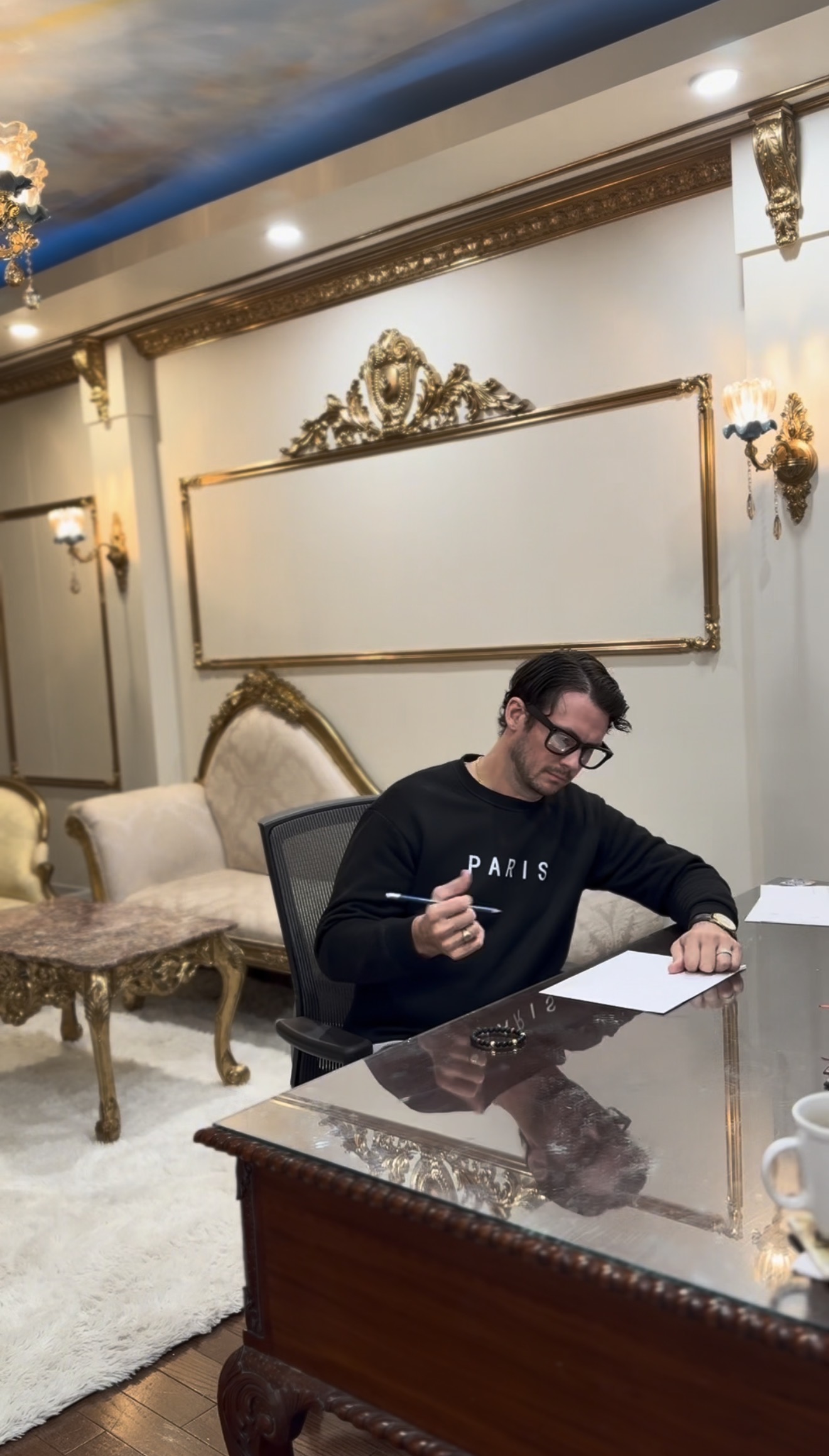
Imagine a couple sitting down across from us at the atelier. There’s a pencil and a blank sheet of paper on the table between us. We ask them to tell us a little about themselves.
“We have a lot in common. We love sports. We love travelling.”
We think this is where a lot of engagement ring designers get stuck. We could ask which team they cheer for, or which city they love most. But say they tell us the Leafs and Paris. We know two more things about them, and we’re still sitting there with the same blank sheet of paper.
The next question matters. What is it about travelling together that they love? What happens between them at a game? Somewhere in those answers, we might begin to understand how they look after one another, how they make each other laugh, or why an ordinary evening feels different when they spend it together.
Every love story deserves to be designed. How deeply the design touches the people who wear it depends on how well their story is understood.
And there’s a delicate part to that. We all have protective walls around the things closest to our hearts. We’re asking two people who have only just met us to let us see a little of what’s behind theirs. That takes trust. It requires attention to their pace, room for a pause, and care with whatever they choose to share.
Sometimes the gentlest way to go deeper is to ask about an ordinary Tuesday night at a hockey game.
“If we sat one row behind the two of you at a game, what would we see you do?”
Imagine she laughs and reaches for his hand. “Whenever it goes into overtime, he squeezes my hand three times.”
And he says, “You do it to me on airplanes.”
“When?”
“Every takeoff. Right when the wheels leave the ground.”
We could easily miss what just happened. We could be looking down, writing hockey and travel in our notes. Meanwhile, she’s reached across the table and shown us the very thing we’re trying to understand.
We’d want to give them a moment, then ask him, “What do you want her to know when you squeeze her hand?”
Suppose he says, “Just that I’m here.”
Now we’d pick up a pencil.
We’d sketch the diamond she loves and the slim gold band she came in picturing. Then we’d slip a sample ring onto her finger and ask her to touch the band with her thumb. Right where her thumb lands, we’d draw three shallow grooves. We’d round their edges and leave enough gold between them that she could feel each one with her eyes closed.
That little design decision came from watching her reach for his hand. Their gesture gave us the number of marks, where they might belong, and how they ought to feel. Before making the ring, our designers and goldsmiths would explore their depth and spacing with the couple, so the finished detail felt comfortable and the band had the strength it needed.
Then we’d turn the sketch around and show them where her thumb would go.
“Is that something you’d want to keep for yourselves?”
We’d want to hear what they recognise in it. Perhaps the idea feels exactly right. Perhaps her answer takes us somewhere else. Their response helps us understand whether we’ve found a detail that belongs in their ring.
Observation is part of the design work. So is knowing what to do with what we observe. We have to notice the gesture while it happens, understand what it means to the people making it, and find a way to articulate it through a shape, a surface, or the way the ring feels on a hand.
Sometimes that meaning is there in plain sight. Sometimes it takes another question and a little time. The care is in knowing how gently to ask, and allowing the couple to decide how far the conversation goes. What we think of as peering into the soul of a client begins with paying very close attention to what they choose to show us.
Every client has substance, motivation, and a purpose behind their want for an engagement ring. That deserves a place in the conversation. We want to understand what they hope the person receiving it will feel, and what this promise means at this particular moment in their lives.
There is a whole world inside a relationship. Stepping inside it to design its ring requires noticing the parts a couple wants to have told. Some details may be shared with everyone who admires the ring. Others may remain between two people for the rest of their lives. That choice belongs to them.
This is the kind of work explored in The Designer’s Guide, our series of books by Nicholas Lessard Coutu. The knowledge behind a design shapes the questions we think to ask and the possibilities we can see in an answer.
In The Designer’s Guide to Storytelling: Client Perspective, one of the questions explored is what you notice about the person you love. In our imagined conversation, she knows exactly what he does in overtime. He knows the instant she reaches for him on a plane. Each has noticed something the other does almost without thinking.
The volume on symbolism considers the next part of the designer’s job. Once we understand what a gesture means to them, how do we give it a form they’ll recognise as their own? For these two, the answer has to do with touch. She could find those three marks with her thumb on a dark plane, even on a flight she takes without him.
Studying these questions gives us more ways to listen and more ways to draw. A couple reading the guides can also find language for something they’ve felt for years, or remember a moment they hadn’t thought to mention. Then we can sit together, put those observations on paper, and consider what deserves a place in the ring.
The beauty of that work is how personal the result can become. The diamond, the proportions, the colour of the gold and the feel of the band all have a part to play. Alongside them is a detail whose significance these two people can understand immediately. Every time she finds it with her thumb, she has the opportunity to remember what he meant.
I’m here.
We think about the responsibility in that first conversation. A couple can walk into the atelier, tell us they love sports and travelling, and feel they’ve given us very little to work with. Meanwhile, he’s been telling her he loves her three squeezes at a time for years.
They’ve already done their part. Asking the next question is ours.
Tell us a little about the person you love. Bring a memory, a gesture, or whatever feels like a place to begin. We can explore what it might become.