By Nick Coutu
How Far We’ve Come in 30+ Years of Engagement Ring Making
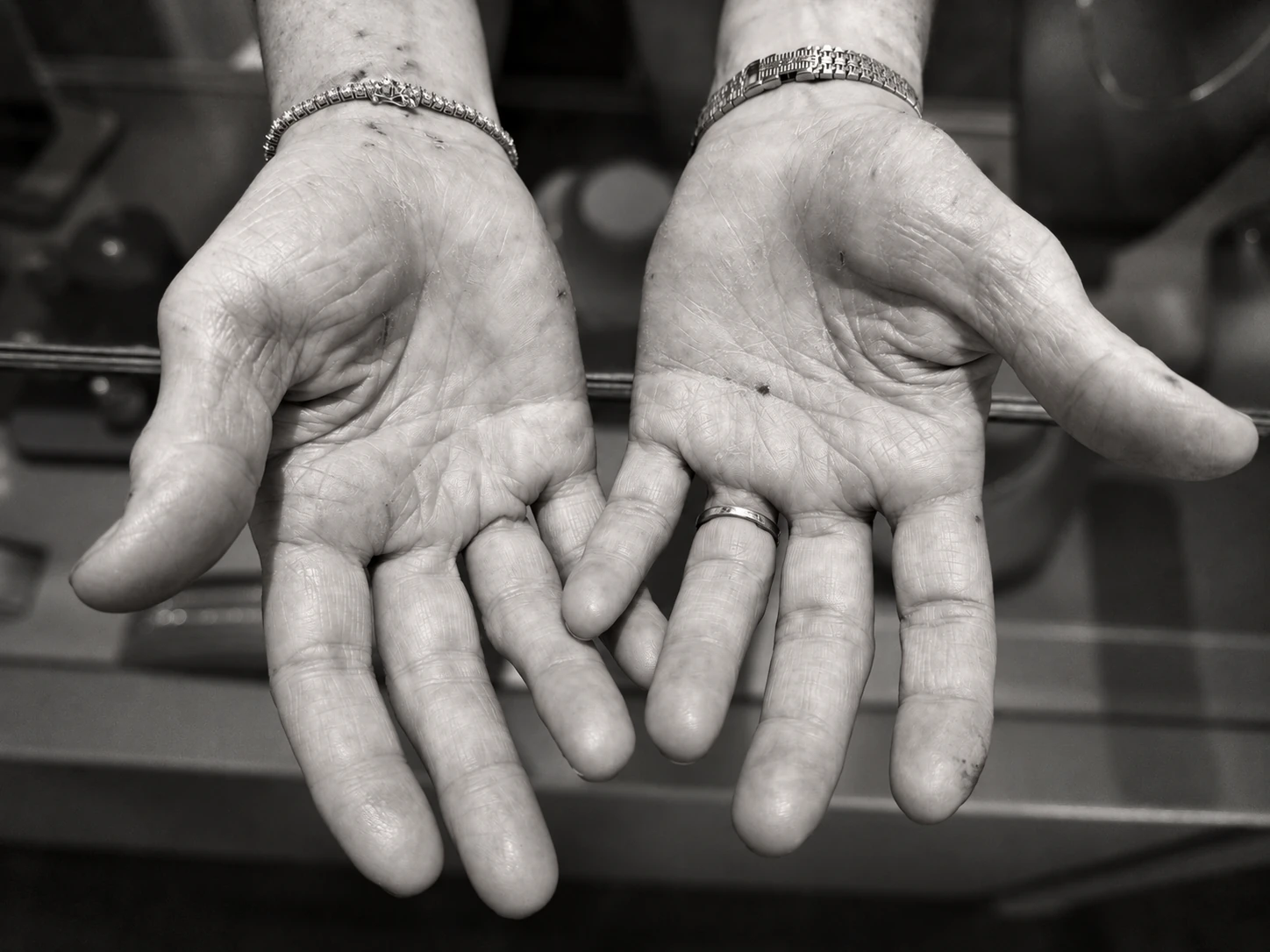
Thirty-some years ago, when my parents started making jewellery, there were limits to what could reasonably be done.
Everything took longer. Information moved slower. Diamonds were harder to source. Design tools were less sophisticated. If you wanted to make something unusual, there were often real technical obstacles standing in your way.
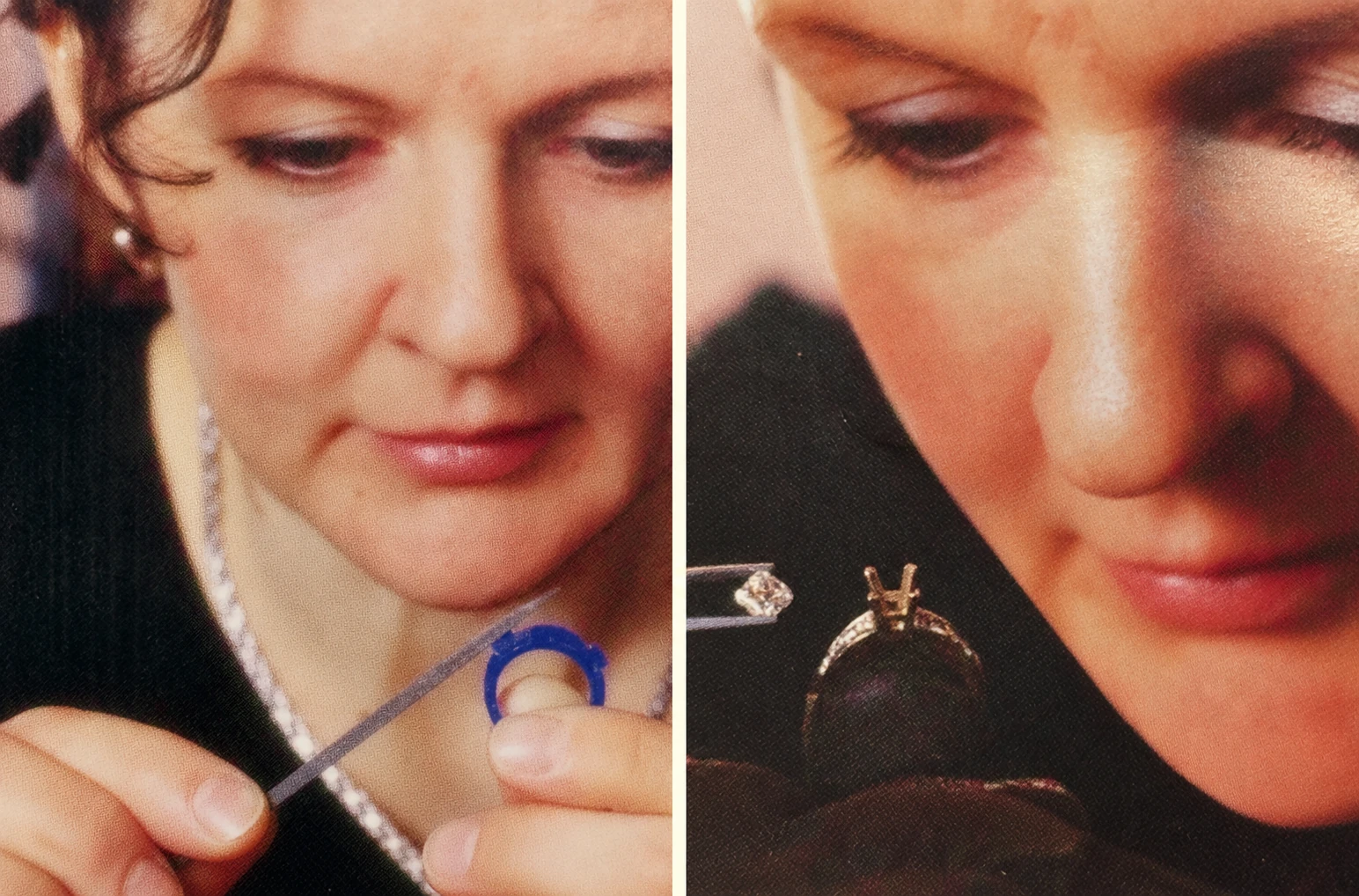
Marianne Lessard at work. From the Lessard Coutu family archive.
Today, most of those obstacles are gone.
We can sketch something in the morning, build it digitally, examine it from every angle, print it, cast it, set it and create something with a degree of precision that would have been difficult to imagine when Lessard Coutu began.
We can search thousands of diamonds around the world.
We can make almost anything.
And after more than 30 years of making engagement rings, I think one of the most important things we have learned is this:
Just because you can design anything doesn’t mean you should.
The question is no longer Can we make this?
The better question is:
Why is this here?
Why does that detail belong in her ring?
Why that diamond?
Why that shape?
Why that line?
Why hide something underneath the setting that almost nobody else will ever see?
Why make this ring for this particular woman?
That is where engagement ring design gets interesting.
A design detail should have a job
I don't think an engagement ring needs more details simply to make it more “custom.”
It needs the right details.
A design decision should do something.
Maybe it reminds her of a place the two of you love.
Maybe there is a tiny detail that only the two of you understand.
Maybe the profile of the ring references something she once said without realizing you remembered.
Maybe the diamond was chosen because of the way she wears jewellery, the shape of her hands or the way you know she sees herself.
Maybe a detail exists for no other reason than to make her wonder:
How did he know?
That is a very different objective than making a ring that looks unusual.
The purpose of a custom engagement ring is not to prove how creative the jeweller is.
The purpose is to make your partner feel deeply seen.
To make her feel special.
To show her how closely you have paid attention.
To remind her what you admire about her.
And, hopefully, to give the two of you an object that makes you feel a little more connected every time you look at it.
Those are much harder design problems than deciding whether a ring should have six diamonds or eight.
More possibility requires more restraint
There is an irony to where jewellery design has arrived.
The more capable our tools become, the more discipline the designer needs.
CAD lets us build almost anything.
3D printing lets us manufacture forms that would once have been extremely difficult.
The global diamond market gives us access to an extraordinary range of stones.
Technology keeps removing limitations.
But limitations were never necessarily the enemy of good design.
Sometimes they forced people to make decisions.
Today, when almost everything is possible, somebody still has to say:
That doesn't belong.
Or:
That detail is beautiful, but it has nothing to do with her.
Or even:
We could make this far more complicated. We shouldn't.
Thirty-plus years of making engagement rings teaches you that restraint is part of design too.
The goal isn't to squeeze every idea into a ring.
The goal is to find the few ideas worth keeping.
You are trusting someone with more than jewellery
I think this is also why choosing the person who designs your engagement ring matters so much.
You're not simply hiring someone who knows how to operate CAD software.
You're giving someone pieces of your relationship and asking them to decide what matters.
That requires a very different skill.
A jeweller has to know when to ask another question.
When something you casually mentioned is actually important.
When your partner's personality should influence the design.
When a sentimental idea can become something elegant rather than literal.
When to push an idea further.
And when to leave it alone.
You can't just hand that responsibility to anyone who knows how to make a ring.
Because technical ability isn't the same thing as judgement.
And judgement isn't the same thing as taste.
And taste isn't the same thing as understanding two people well enough to make something meaningful for them.
That is how someone can spend a tremendous amount of money on a perfectly manufactured ring and still end up with something they don't particularly love.
Or worse, something she doesn't particularly love.
The ring might be technically excellent.
It might contain a beautiful diamond.
It might photograph wonderfully.
But if it doesn't feel like her, something was missed.
We didn't start with this philosophy
I think that is worth admitting.
We didn't sit down in 1990 with all of this figured out.
We learned it one ring at a time.
One proposal at a time.
One nervous person sitting across the table trying to explain the woman he loves.
One sketch at a time.
One customer saying, “That's exactly her.”
One person tearing up when they saw something hidden in the finished ring.
And probably a few designs along the way that taught us what not to do.
Thirty-plus years doesn't make you better because you've simply been around longer.
It gives you thousands of opportunities to notice patterns.
And one of the patterns I keep coming back to is that the rings people seem to care about most aren't necessarily the most complicated ones.
They're the ones where the decisions mean something.
The next generation of custom should be more human
We have better technology than we've ever had.
Better access to diamonds.
Better visualization.
Better manufacturing.
More freedom.
More possibilities.
I love all of it.
But I don't think the future of custom jewellery is simply more customization.
I think it is more meaning.
A customer shouldn't have to become an amateur jewellery designer, sitting at a screen choosing from 46 settings, 12 prong styles and a menu of decorative options.
That's not the interesting part.
Tell me about her.
Tell me what you notice that other people don't.
Tell me something she's done that you'll never forget.
Tell me what made you realize she was the person you wanted to marry.
Give a good designer that material.
Because after more than 30 years, the most exciting thing we can do with all of these new tools isn't make increasingly elaborate rings.
It's use them to make increasingly personal ones.
We can make almost anything now.
So perhaps the most important skill left is knowing what is worth making.