By Nick Coutu
Diamond Colour Chart: Choosing for Your Ring
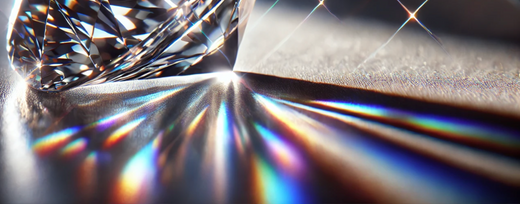
Colour preference is personal. A diamond's colour grade is assessed under controlled conditions. Understanding that distinction helps you decide how much weight to give the grade.
You may love a crisp, colourless appearance, enjoy a little warmth, or find that the differences between your shortlisted diamonds matter less than their proportions and sparkle. The aim is to choose deliberately, with the diamond and the ring design considered together.
Understanding the diamond colour chart
GIA's D–Z scale describes the normal colour range, from colourless to light yellow, brown or grey. Graders compare diamonds with masterstones under controlled lighting. This creates a consistent reference that everyday viewing conditions cannot provide. Source 1
| Grades | Category |
|---|---|
| D–F | Colourless |
| G–J | Near-colourless |
| K–M | Faint |
| N–R | Very light |
| S–Z | Light |
These categories describe colour ranges; what you notice still depends on the stone and viewing conditions. Subtle differences can be difficult to distinguish, especially without a comparison diamond. Use the report to understand the grade and direct comparison to understand your preference. Source 2
For lab-grown diamonds, check the laboratory and report date. Since 1 October 2025, GIA's assessments for qualifying D–Z lab-grown diamonds have used the overall descriptions Premium and Standard rather than individual colour grades. Source 6
Why the same diamond can look different
Lighting and surrounding colours affect appearance. A diamond may look different beside a window, beneath warm indoor lighting, and in a brightly lit showroom. Clothing and the metal around it also contribute to what you see. Source 3
That does not mean its grade changes as you move between rooms. It means a controlled laboratory assessment and the experience of wearing a ring answer different questions.
For a useful comparison, view your shortlisted diamonds together under the same conditions. Then look at them in more than one type of lighting. Ask yourself whether you notice a difference, whether you prefer one, and whether that preference is worth the difference in price to you.
Consider the setting as part of the decision
Diamonds reflect their surroundings, including the metal holding them. Yellow or rose gold can contribute warmth; white metal can create a different contrast with a diamond that has a noticeable tint. Consider the metal immediately around the stone as well as the shank. Source 4
There is no need to treat a colour category as a rule that dictates your metal choice. Start with the ring you want to wear and compare the diamond in that context. If the design includes side stones or a halo, ask to assess the combination together rather than selecting each diamond in isolation.
Colour and cut deserve separate attention
A colour grade does not describe how well a diamond handles light. Proportions and facet arrangement influence its brightness and sparkle, which deserve their own assessment. Source 5
Avoid assuming that a well-cut diamond will automatically make a particular colour grade look colourless. Compare the actual stones. Good proportions and an appealing appearance in motion deserve attention alongside your colour preference.
Our cut guide explains this in more detail. The carat guide explains why weight and visible size are different considerations.
Is there a best-value colour grade?
There is no single grade that is the right purchase for everyone. Start with a shortlist and the actual prices rather than a rule to choose or avoid an entire category.
If you clearly prefer one diamond's colour, that preference belongs in the decision. If you cannot see a meaningful difference, ask what the additional spend buys you elsewhere in the ring. You might prefer a different setting, different dimensions, or simply a lower total price. Keep the complete ring budget in view.
Fancy-colour diamonds are a separate conversation
Fancy-colour diamonds use a different approach to colour assessment, considering hue, tone, and saturation. The D–Z table is not a ranking of pink, blue, or fancy yellow diamonds. If you want a coloured diamond, evaluate it within that category rather than applying the goal of colourlessness. Source 4
Choosing your diamond with LCJ
Bring your preferred shape, ring design, and budget to the conversation. We can help you compare the options and consider colour alongside clarity, cut, and carat weight.
Explore our settings, browse the collection, or begin your design through the Engagement Ring Atelier.
Sources
- GIA, Diamond Color — controlled grading and masterstones: https://4cs.gia.edu/en-us/diamond-color/
- GIA, Understanding Diamond Color from A to Z — categories and fancy colour distinction: https://4cs.gia.edu/en-us/blog/diamond-color-seven-things-you-need-to-know/
- GIA, The 4Cs of Diamond Quality — lighting and surroundings: https://4cs.gia.edu/en-us/blog/4cs-diamond-quality-most-important-c/
- GIA, Diamond Engagement Ring Setting: How Metal Affects Diamond Color Appearance — metal and colour appearance: https://4cs.gia.edu/en-us/blog/engagement-ring-setting-metals/
- GIA, Diamond Quality Factors — cut and light performance: https://www.gia.edu/diamond-quality-factor
- GIA, Updated Laboratory-Grown Diamond Services — reporting change from 1 October 2025: https://www.gia.edu/gia-news-press/updated-laboratory-grown-diamond-services-to-launch-october-1